

Preface
On 2020.10.8 (local time), AMD announced its next-gen processors based on the Zen 3 architecture, and it sparked a ton of discussion. AMD has been suppressed by Intel for a long time, but in recent years it has doubled its market share thanks to the “yes” attribute. This time, AMD’s official claim of a 19% IPC uplift with Zen 3 is basically rubbing Intel’s face into the ground. In the past, AMD’s playbook was “more cores, bigger bowl, works great,” and this time its single-core performance surpassed the i9-10900K for the first time—beating Intel by 16% in Cinebench R20. Sure, prices went up a bit, and the once dragon-slaying少年 has become the new dragon. But rumor has it Intel’s 11th-gen desktop CPUs are still on 14nm+++… which still makes me want to shout: “AMD Yes!”
With AMD’s launch as the trigger, I figured I’d summarize how mainstream consumer CPUs are categorized right now. On both desktop and mobile platforms, the two big vendors keep refreshing their lineups every year, and it gets a bit confusing for regular consumers—so I’m putting together a quick overview to make buying and learning easier.

First, let me quote Baidu Baike’s introduction of the CPU:
The central processing unit (CPU, Central Processing Unit) is a very-large-scale integrated circuit, and it is the computing core (Core) and control core (Control Unit) of a computer. Its main functions are to interpret computer instructions and process data in computer software. The CPU mainly includes the arithmetic unit (arithmetic logic unit, ALU, Arithmetic Logic Unit) and cache (Cache), as well as the data (Data), control, and status buses (Bus) that connect them. Together with internal memory (Memory) and input/output (I/O) devices, it is collectively known as the three core components of an electronic computer.
For consumer PCs, you’re basically choosing between AMD and Intel. A chip is essentially a gigantic maze: tens of billions of branching paths, but only a handful of exits. From an engineering perspective, it’s like building a city (Wuhan, for example) in the microscopic world—and you still have to ensure the “infrastructure” runs in order: things go in when they should, come out when they should, and internal “security” is fully guaranteed. Every “road” and every “building” has to survive trillions upon trillions of passes without any issues. A chip that meets spec has no concept of “repair,” because its lifespan isn’t determined by how frequently you use it, but by the limits of fundamental physics and quantum mechanics. In traditional consumer terms, it’s something that “doesn’t break.” The reason there are only a few top-tier CPU makers is that every single chip you buy must satisfy all of the above—which requires deep technical accumulation and massive capital investment.
Intel’s Blue Team
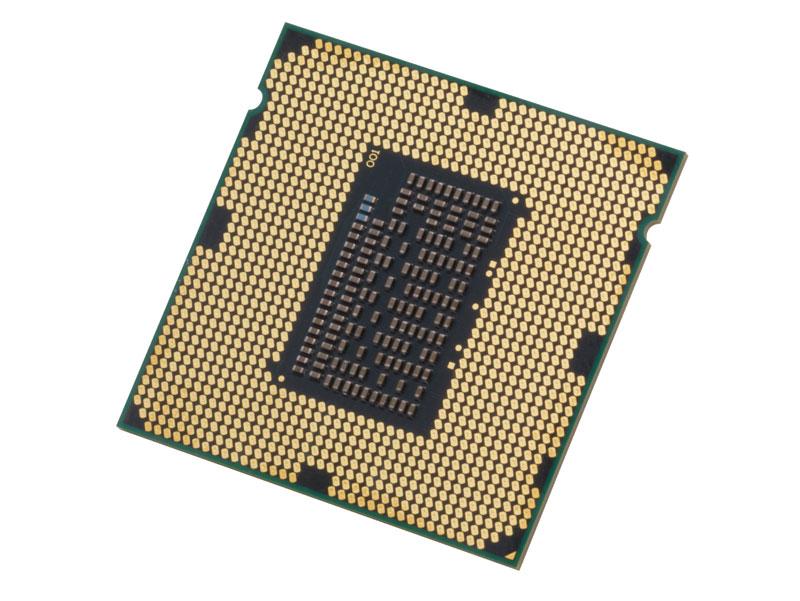
Intel is currently the CPU vendor with the highest share in consumer desktops and mobile devices (danger). As a world-leading CPU manufacturer, Intel’s blue logo always gives off a premium, high-end vibe. Intel is also nicknamed the “toothpaste factory,” because it dominated early on and basically had no real competition—so iteration slowed down, and the process tech kept living off old achievements. In some aspects, there hasn’t been a leap from 4th gen CPUs to today’s 10th gen.

Common Series
Pentium
Pentium was Intel’s glory days. I still remember that old Intel ad—“deng deng deng deng deng”—“give your computer a Pentium heart,” pure nostalgia. With advances in process/tech and rising consumer spending, Intel launched the Core series in 2006 and Pentium stepped down from the throne. But “Pentium” wasn’t abandoned; as a familiar brand, it gradually shifted toward budget products. Still, these days even if people squeeze their build budgets hard, they’ll usually grit their teeth and go Core rather than Pentium.

Celeron
Positioned slightly lower than Pentium. It also has an OEM market and is commonly used in mini PCs and set-top boxes. On Xianyu, the “e-waste scavengers” often use it for soft routers…. But regular consumers rarely use it. You might use it for a NAS or a soft router; for normal office work, this series is uncommon.
Core
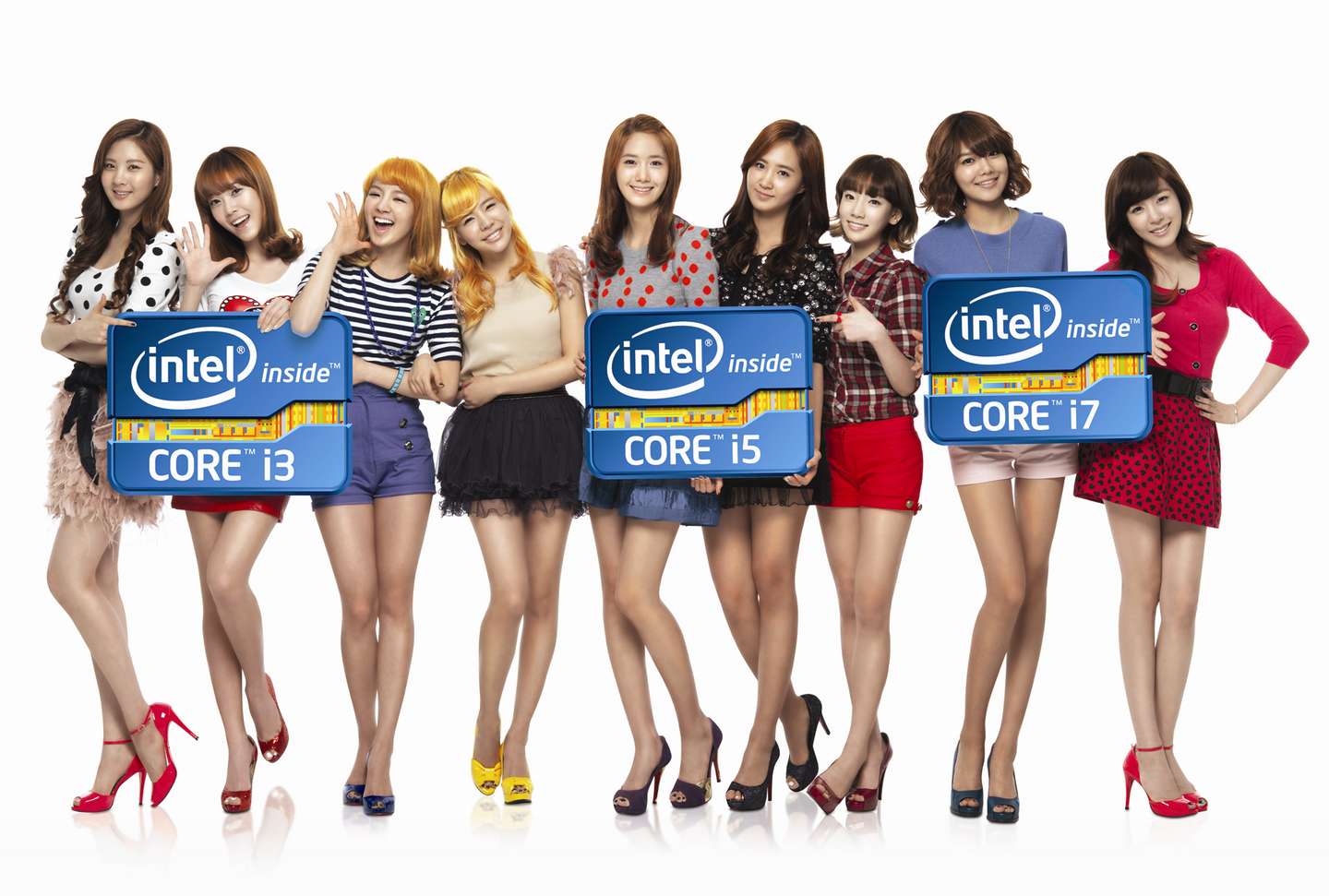
This is Intel’s hottest series right now, and the one most people choose. Core is the familiar i-series: i3, i5, i7, i9, plus the X series—more cores, higher clocks, and stronger performance as you go up. It’s split into desktop and mobile platforms. Desktop is currently up to 10th gen, and mobile is up to 11th gen.
Atom
This was Intel’s attempt to grab a slice of the smartphone SoC market. What I remember most vividly is Lenovo’s K900 phone launched in 2013 with the Atom Z2580: a silver, sharp-edged design, dual-core four-thread, 2GHz, plus 2GB RAM and a 13MP camera—pretty stunning at the time, and they even got Kobe as an endorser.
Later, the mobile chip market was just too brutal, and Atom insisted on x86, which increased the difficulty for developer adaptation. Market feedback was so-so. By late April 2016, Intel canceled the release of two new versions of the Atom mobile processor lineup that had been planned for 2016, and Intel would exit the smartphone chip market. It’s basically extinct now.

Xeon
This is Intel’s server CPU line. Wait—didn’t we say consumer CPUs? The reason I’m mentioning it is that early Xeons had insane value and used the same LGA1150 socket. The lowest-end E3 tier could match the performance of the Core i7 tier of the same era. The legendary “god U” was the E3-1231 V3: Core i5 price, Core i7 performance—too good. But today’s Xeon is truly Xeon: price, performance, and stability are clearly separated from Core, and it has become more vertically segmented into Xeon E, Xeon W, Xeon, etc. Still, early E-series chips are still circulating in the market—because Intel squeezes toothpaste….
Model Naming


xx xxx xx
The first one or two digits indicate the generation (since we’re already at 11th gen, it’s now two digits).
The bigger the middle number, the stronger it is.
The last two digits may not exist; if they do, they’re usually a letter suffix.
Suffix Buffs
| Suffix | Meaning |
|---|---|
| B | Desktop soldered standard-voltage |
| F | No integrated graphics |
| G | With AMD integrated graphics |
| H | Laptop soldered standard-voltage |
| S | Special edition |
| K | Unlocked multiplier, can overclock |
| Q | Quad, four cores |
| M | Dual-core mobile low-voltage, commonly used before 4th gen |
| Y | Mobile ultra-low voltage; back when ultrabooks were popular, most came with Y |
| T | Low-power desktop version, slightly lower than standard |
| U | Low-power mobile version; most business thin-and-light laptops use U |
| X/XE | HEDT (high end desktop) processors, usually with lots of cores and quad-channel memory; specs far exceed normal PCs |
| G1-G7 | Intel 11th-gen new naming method: G highlights graphics performance; the number indicates tier—bigger is stronger |
AMD’s Red Team
In the early days, AMD helped Intel redesign product pricing. It used to trade blows with Intel, but later it fell far behind in process technology—Intel moved to 22nm while AMD was still polishing 32nm. For years it got stepped on by Intel, and because it was cheap, it became the “scammer card” used by shady PC shop owners to trick newbies. But AMD has always played both CPU and GPU, going head-to-head with Intel and NVIDIA respectively. Now AMD’s CPUs are fabbed by TSMC, charging straight into 7nm, and the RX series GPUs can still fight NVIDIA. I’m really looking forward to what happens next in the consumer electronics market.
Series
Athlon
AMD’s early flagship. The main selling point was low price. K8 was once the main force, later overshadowed by other series, but its low price won over a lot of consumers.
“Rural Enterprise” series
These are some architectures AMD used during its development: Piledriver, Steamroller, Excavator. Because the names were so distinctive and the prices were low, people loved calling AMD a “rural enterprise.” And it was exactly this constant polishing of the “rural enterprise” series that led to the later Zen-based Ryzen. Along the way, the price temptation brought in wave after wave of loyal fans.
Ryzen
This is AMD at its peak right now, directly targeting Intel’s popular consumer Core series. The most notable point is that AMD’s mobile consumer market share doubled, basically carried by Ryzen. Even the aloof ThinkPad released a 3500U version, becoming a “true value entry machine” for a while. This year, the 4000 series pushed another高潮: the 4800U took mobile CPU core counts to 8 cores 16 threads. Remember, the famous toothpaste factory used dual-core mobile CPUs for more than a decade; it wasn’t until 2018’s 8th-gen Core that they finally “felt generous” enough to go quad-core. Ryzen is categorized with an R prefix, similar to Core’s i-series: R3, R5, R7, R9—more cores, higher clocks, and stronger performance as you go up. One more highlight: the sold-out 4800H. With a 45W standard TDP, 8C16T plus Vega iGPU, it was cheaper than Intel laptops with 10th-gen Core i5, and it rubbed 10th-gen Core i7 into the ground—because the strongest 10th-gen mobile i7 at the time was at most 6 cores. Intel responded with the 8-core 10875H, and still got hammered. The 4800H’s insane config gained a huge fanbase, leading to shortages—and then it raised prices and became the dragon 😬

Threadripper
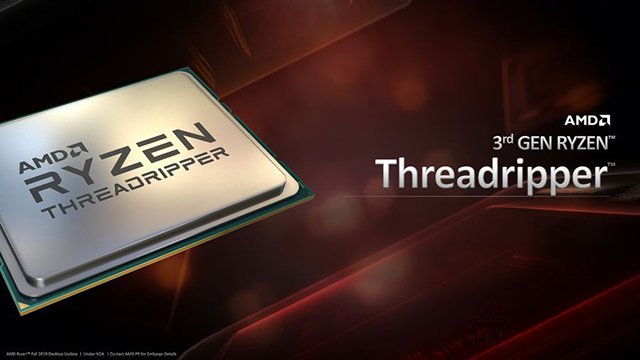
AMD’s HEDT platform CPUs from recent years, competing with Intel’s X/XE-suffix processors. The latest is the 3rd-gen 3000 series released in 2019: 64 cores and 128 threads. It’s the kind of spec that makes you shocked… but also feel like you’ll never use it. For normal PCs—gaming, business/office—there’s no need to consider HEDT unless you’ve won 10 million and genuinely don’t know how to spend it. But HEDT is perfect for heavy productivity workloads that depend on threads/cores, like video editing and 3D modeling/rendering. For regular consumers, Threadripper and Intel X/XE are basically performance monsters used as brand endorsement: “Look, we can make a CPU this insane—come buy our chips.”
EPYC
AMD’s latest server CPU line, competing with Intel Xeon. Performance is strong, and power draw is also terrifying—200W+. I can’t afford it and don’t need it, so I can only admire it from afar and hear that the compute is crazy. But personally, I feel that aside from supercomputers, servers prioritize stability. Many standards are set by Intel, and there are lots of acceleration tech patents—so does AMD still have a long road ahead to truly break into the server space?
Model Naming
xxxxxx The first four are digits; the last two may not exist—if they do, they’re suffix letters.
The first digit indicates the Zen architecture generation. Desktop and mobile originally differed by 1; starting from the 5th generation, they were unified. The latest now starts with 5.
From the second digit onward, bigger means stronger; the strongest is 9.
The third digit is generally 0 except for Threadripper and the Ryzen 3950X.
The fourth digit is currently 0 for all models.
Suffix Buffs
| Suffix | Meaning |
|---|---|
| E | Low power, equivalent to Intel’s T |
| X | Supports XFR dynamic frequency boost, similar to Intel’s K (though AMD’s whole lineup doesn’t lock multipliers now) |
| U | Laptop low-voltage version, same as Intel |
| H | Laptop standard-voltage version, same as Intel |
| G | With integrated graphics; without it by default (opposite of Intel’s F) |
| T | Supports turbo, similar to Intel Turbo Boost |
The End
This is the beginner篇—just a simple overview of Intel and AMD product lines. If you’re a newbie learning to build your own PC and you don’t want to spend too much time, my suggestion is: within the price you can afford, buy the most expensive one. After all, you know what you’re buying—can money not know what it’s buying?

If you’re a beginner—whether you want to become a PC-building enthusiast or just learn to read specs so you don’t get scammed by shady sellers—I’ll continue with an advanced summary later, covering CPU parameters (like frequency, cores, threads, cache size, architecture, process node, power consumption, and interfaces).
References
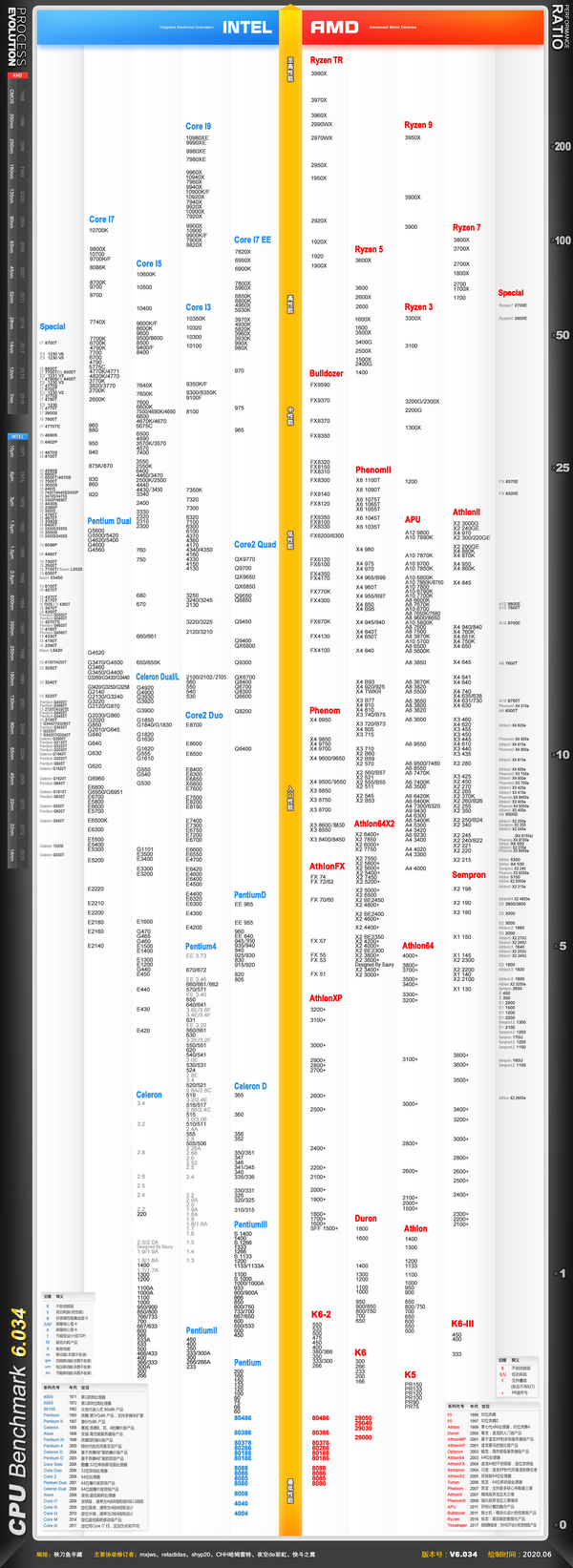
- A desktop CPU performance tier chart, click
- Intel® Processor Names and Numbers
- AMD Ryzen Threadripper 3rd Generation release date, news, and rumors
- AMD Ryzen Mobile Processors with Radeon Graphics
All articles in this blog, unless otherwise stated, are licensed under @Oreoft . Please indicate the source when reprinting!